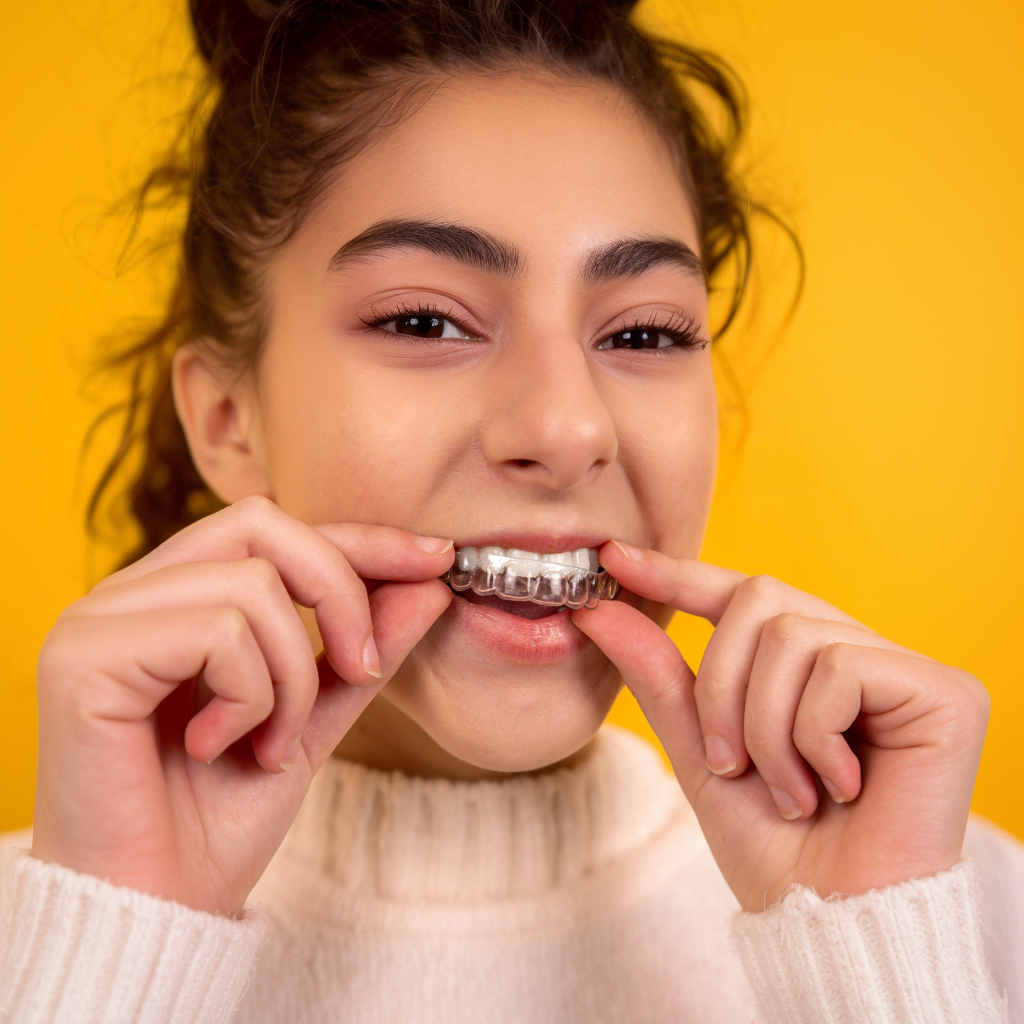
How Long Do Retainers Last and When Should You Replace Them?
- Retainers don't last forever, and the lifespan depends heavily on the type you have, your daily habits, and how well you care for them.
- Clear (Essix or Vivera) retainers typically need replacement every 1 to 3 years, while Hawley retainers can often last 5 to 10 years with proper care.
- Fixed (bonded) retainers can last decades, but the bonded wire can fail unexpectedly and should be checked periodically by your orthodontist.
- Cracks, warping, discoloration, and changes in fit are all clear signals that your retainer is no longer doing its job as it should.
- The cost of timely replacement is almost always far less than the cost of fixing teeth that shifted while you waited.
Table of Contents
- Introduction
- Meet Dr. Bill Gierie and Dr. Steven Hancock
- Why Retainer Replacement Matters
- Type 1: Clear (Essix and Vivera) Retainers
- Type 2: Hawley Retainers
- Type 3: Fixed (Bonded) Retainers
- Universal Signs Your Retainer Needs Replacement
- The Hidden Cost of Waiting Too Long
- How We Make Replacements Easy at Port City Ortho
- Why Coastal NC Families Choose Port City Ortho
- Conclusion
- Frequently Asked Questions
Introduction
You open your retainer case in the morning, slide your tray over your teeth, and feel something off. Maybe it doesn't sit quite as snug as it used to. Maybe there's a small crack you didn't notice yesterday. Maybe the plastic looks a little cloudier than you remember. You take it out, examine it for a moment, and ask the question almost everyone asks at some point: how long is this thing actually supposed to last?
It's one of the most common questions we hear at our offices, and the honest answer is that there isn't a single number. The lifespan of your retainer depends on what type you have, how you wear it, what you eat and drink while it's in (we'll come back to that one), and even how the climate around your home affects the plastic. The good news is that once you understand a few key principles, you'll be able to recognize when it's time for a replacement long before your teeth start telling you the hard way.
At Port City Ortho, we've been creating and replacing retainers for patients across Wilmington and Southport for decades. This guide brings together everything we want you to know about retainer lifespan, broken down by type, with clear signals for when replacement is the right move.
Meet Dr. Bill Gierie and Dr. Steven Hancock
Dr. Bill Gierie is one of the most experienced clear-aligner specialists in the country. He has lectured internationally as a member of the Invisalign Speakers Bureau, served as an adjunct professor at UNC's Department of Orthodontics, and was one of only seven members worldwide on Align Technology's Invisalign Global Scientific Advisory Board. When it comes to retainer expertise, you are in remarkable hands.
Dr. Steven Hancock graduated at the top of his class from UNC's School of Dentistry, where he stayed to complete his orthodontic specialty residency. He brings a calm, detail-oriented approach to every patient interaction.
Port City Ortho is proudly a privately owned, non-corporate practice. We've been recognized as Southeast North Carolina's earliest Top 1 Percent Invisalign Providers, and we serve our community from three locations in Wilmington and Southport, providing the same hands-on, personalized care that has defined our practice for decades.
Why Retainer Replacement Matters
Here's the simple truth about why retainer replacement matters more than most patients realize. A retainer is a tool, and like any tool, it works only as well as its physical condition allows. A cracked clear retainer doesn't fit the way it should. A warped Hawley wire doesn't apply pressure the way it was designed to. A loose bonded wire isn't actively holding the teeth where they need to be. Even if you wear your retainer perfectly on schedule, a worn-out retainer is no longer doing its job.
And here's the part that catches people off guard: the most common way patients discover their retainer has failed is when their teeth begin to shift. By the time you can feel or see that shifting, the retainer has often been compromised for weeks or months. Replacement matters most when it happens before that point.
The typical lifespan of a Hawley retainer with proper care. Clear and Essix-style retainers, by contrast, usually need replacement every 1 to 3 years, with material degradation often beginning much earlier in the lifespan.
Source: Naser-ud-Din et al. (2024), peer-reviewed wear study and American Association of Orthodontists clinical guidance
Type 1: Clear (Essix and Vivera) Retainers
Clear retainers are by far the most popular type today, especially for patients who have finished treatment with Invisalign or other clear aligner systems. They are nearly invisible when worn, comfortable, and easy to clean. They are also, however, the most prone to wear and the most likely to need regular replacement.
TYPE 1 Clear Retainers (Essix and Vivera)
Typical lifespan: 1 to 3 years with proper care
Made from thin, clear thermoplastic material. Invisible when worn, comfortable, and the same general shape as Invisalign trays. The most popular retainer type today, but also the most vulnerable to wear and damage.
Signs it's time to replace:
- Visible cracks, splits, or thin spots in the plastic
- Cloudiness or significant discoloration that doesn't clean off
- Warping or distortion (often from heat exposure or accidental washing)
- A fit that's looser than it used to be, with the retainer no longer hugging the teeth
- Persistent odor that doesn't go away with thorough cleaning
- Holes worn through high-pressure areas (common in patients who clench or grind)
Replacement considerations:
Most patients budget for replacement every 1 to 3 years. Vivera retainers, made specifically by Invisalign for retention use, are often sold in sets of multiple identical trays, giving you backups ready to deploy when one wears out. We'll walk you through the options during your visit.
Pro Tip: Heat is the #1 enemy of clear retainers. Never run them under hot water, never leave them in a hot car (a serious risk in coastal NC summers), and never put them in a dishwasher. A few minutes near heat can warp a perfectly good retainer beyond repair.
Type 2: Hawley Retainers
The Hawley retainer is the classic design most people picture when they hear the word "retainer": an acrylic plate that sits on the roof of the mouth, with a wire that wraps around the front of the teeth. It is less aesthetic than a clear retainer, but it is also significantly more durable and often more cost-effective over time.
TYPE 2 Hawley Retainers (Wire and Acrylic)
Typical lifespan: 5 to 10 years with proper care
The traditional wire-and-acrylic retainer design. Visible when worn but very durable. Often the better long-term value, and frequently repairable when minor issues arise.
Signs it's time to replace:
- Cracks or chips in the acrylic plate, especially in thin areas
- Wire that has become visibly bent or no longer hugs the teeth correctly
- Acrylic that has become discolored despite regular cleaning
- A fit that has gradually loosened over time
- Wire that has separated from the acrylic at attachment points
- Difficulty seating the retainer fully against the palate
Replacement considerations:
Hawley retainers often last twice as long as clear retainers and can sometimes be adjusted or repaired rather than replaced when small issues arise. They tend to be the better long-term value for patients who don't need the cosmetic invisibility of clear options. Talk with us about whether one is right for you.
Time for a Retainer Check?
Whether you need a quick evaluation, a replacement set, or a backup retainer for travel, our team makes the process simple. Call any of our three Wilmington and Southport offices today, or schedule online.
→ SCHEDULE YOUR APPOINTMENT TODAYType 3: Fixed (Bonded) Retainers
Fixed or bonded retainers are thin wires permanently attached to the back of the front teeth, usually on the lower arch and sometimes also on the upper. Because they're always in place, they don't depend on patient compliance and can offer exceptional long-term stability. But they require their own kind of monitoring.
TYPE 3 Fixed (Bonded) Retainers
Typical lifespan: Many years to decades, with regular checks
A thin wire bonded behind the front teeth, working invisibly day and night. Excellent for patient compliance and long-term stability. The downside: when something goes wrong, you may not notice right away.
Signs it's time to replace:
- Visible loose or detached bonding (a section of wire that's lifted away from a tooth)
- A tooth that has shifted or rotated near the bonded wire
- Sharp or rough wire edges that catch the tongue
- Wire that has broken in one section, leaving an unsupported gap
- Difficulty flossing in an area that used to be easier to access
- Visible plaque or calculus buildup along the bonded wire
Replacement considerations:
Fixed retainers should be evaluated at every dental cleaning and at periodic orthodontic check-ins. When bonding fails, we can usually re-bond the existing wire or replace it with a new one. Small issues caught early are much easier to fix than larger shifts that develop after a longer period of failure.
Did You Know: Many patients have a fixed retainer behind their lower front teeth and a removable retainer for the upper arch. This combination offers excellent stability where teeth tend to shift most and flexibility for the upper smile. Our doctors will recommend what works best for your specific bite.
Universal Signs Your Retainer Needs Replacement
Across all retainer types, certain signals tell you the same thing: it's time for an evaluation. If you notice any of these, give us a call.
Your retainer suddenly feels tight when you put it in, like your teeth are trying to fight against it
Your retainer feels loose where it used to fit snugly
You can see visible damage of any kind: cracks, warping, broken wires, lifted bonding
Your retainer no longer cleans up well, with persistent odor or discoloration
You notice your teeth feel different or look slightly different in photos
It's been over 3 years since your last clear retainer replacement
It's been over 10 years since your Hawley retainer was made, and you've never had it evaluated
You've recently had any dental work that may have changed the shape of a tooth
None of these on their own is a crisis. All of them deserve a call so we can take a quick look and let you know whether a replacement is needed.
How We Make Replacements Easy at Port City Ortho
Replacing a retainer with our team is designed to be straightforward, efficient, and accessible. Here's what to expect.
A quick evaluation visit where we examine your current retainer, check the fit against your teeth, and determine whether you need a replacement, a repair, or simply a refit.
Digital scanning with our iTero scanner eliminates the need for messy traditional impressions. The whole process takes just a few minutes and is significantly more comfortable.
In-house 3D printing capabilities at our practice allow us to produce many clear retainer replacements with exceptional speed and precision.
Transparent pricing and flexible payment options with no surprises. We discuss the cost upfront and provide written estimates so you can plan accordingly.
Backup retainer sets are available for patients who travel often, lead active lifestyles, or simply want peace of mind. Having a spare can save you significant stress down the road.
Why Coastal NC Families Choose Port City Ortho
Port City Ortho has been the orthodontic home for generations of families across Wilmington, Southport, and the surrounding coastal communities. Here's what sets our practice apart.
World-class clinical expertise: Dr. Gierie's international Invisalign teaching role and the depth of experience across our team mean you're getting some of the most advanced orthodontic care available anywhere
Three convenient coastal NC locations: Mayfaire (Wilmington), Shipyard (Wilmington), and Southport — UNC-trained orthodontists and the same high standard
Top 1 Percent Invisalign Provider, with deep expertise in modern aligner and retainer technology
Advanced technology: 3D imaging, low-dose digital radiographs, iTero digital scanners, and in-house 3D printing for fast, accurate retainer production
Proudly privately owned and non-corporate, with care decisions made by the doctors who treat you, not by a distant corporate office
A team that stays with you for life, from your initial treatment through every retainer replacement that follows
At Port City Ortho, we want every patient to feel that their smile is protected for the long haul, with a trusted team ready whenever they need us.
Conclusion
Retainers don't last forever, but with a clear understanding of what to expect from each type and what signals call for action, you can stay ahead of the curve and protect your smile for life. Clear retainers typically need to be replaced every 1 to 3 years. Hawley retainers can last 5 to 10. Bonded retainers can last decades but need periodic checks. And all of them benefit from a relationship with an orthodontic team that knows your case and treats your long-term smile health as their long-term commitment.
Our team at Port City Ortho is here whenever you need us, whether for a quick check, a replacement, or a thoughtful conversation about what comes next. Reach out anytime. Your smile is worth it.
Three Convenient Coastal NC Locations
Mayfaire Office | Wilmington
700 Military Cutoff Rd., Ste. 100 | 910-256-8590
Shipyard Office | Wilmington
2606 Iron Gate Drive, Ste. 101 | 910-452-7988
Southport Office
4330 Southport-Supply Rd. | 910-457-0020
Website: portcityorthodontist.com
Frequently Asked Questions
How can I tell if my retainer needs to be replaced or just needs a repair?
Some Hawley retainers can be adjusted or repaired when small issues arise — a wire that's bent out of shape, a section of acrylic that needs reshaping, or a fit that needs refining. Clear and Essix retainers, in contrast, almost always need full replacement when they break or warp because the plastic cannot be repaired safely. The best way to know which path is right for your retainer is to bring it in for a quick evaluation.
Do retainers wear out faster in coastal North Carolina?
Heat is the biggest accelerator of retainer wear, and coastal NC summers can be tough on clear retainers left in cars, beach bags, or even on a sunny windowsill. We strongly recommend keeping your retainer in its case and out of direct heat at all times. If you've been wondering whether sun and heat exposure has affected your retainer, that's worth a quick visit to check.
Can I just buy a replacement retainer online instead of going to my orthodontist?
We strongly recommend against this. Online retainer services do not have access to your case history, your current bite, or the precise specifications of your previous retainer. An ill-fitting retainer can cause more harm than no retainer at all, potentially shifting teeth into positions that are difficult to correct later. The replacement process at our office is fast, comfortable, and built around your specific smile.
How much do replacement retainers cost?
Cost varies depending on the type of retainer, the materials, and whether you need single or multiple sets. We provide clear pricing upfront with no surprises, and we offer flexible payment options at all three of our offices. Many patients find that the cost of a timely replacement is far lower than they expected, especially when compared to the cost of correcting tooth shifting later.
Do I need a backup retainer?
Backup retainers are an excellent investment for patients who travel often, lead active lifestyles, or simply value peace of mind. Vivera retainers, in particular, are often sold in sets of multiple identical trays, giving you backups from the start. Talk with our team at your next visit about whether a backup retainer makes sense for you.
How often should I bring my retainer in to be checked?
We recommend a quick retainer evaluation every couple of years, even if nothing seems wrong. Our team can spot early signs of wear, fit issues, or bonded-retainer problems that you may not notice on your own.
Sources
- Naser-ud-Din, S., et al. (2024). Assessment of wear characteristics, longevity and stiffness of Essix-type retainers: an in vitro study. Read full study
- Manzon, L., et al. (2018). Periodontal health and compliance: A comparison between Essix and Hawley retainers. American Journal of Orthodontics and Dentofacial Orthopedics. View study
- Tay, J., et al. (2024). Environmental sustainability of post-orthodontic dental retainers: a comparative life-cycle assessment of Hawley and Essix retainers. Read full study
- American Association of Orthodontists. Patient Care: Retainers and Long-Term Smile Health. View AAO patient resources
- American Dental Association. MouthHealthy: Orthodontic Retention. View ADA patient guide
This blog is intended for general educational purposes only and is not a substitute for personalized medical, dental, or orthodontic advice. Please contact Port City Ortho or your healthcare provider with specific questions about your individual retainer, replacement timing, or long-term orthodontic care.
READY TO ELEVATE YOUR SMILE?
SHARE